
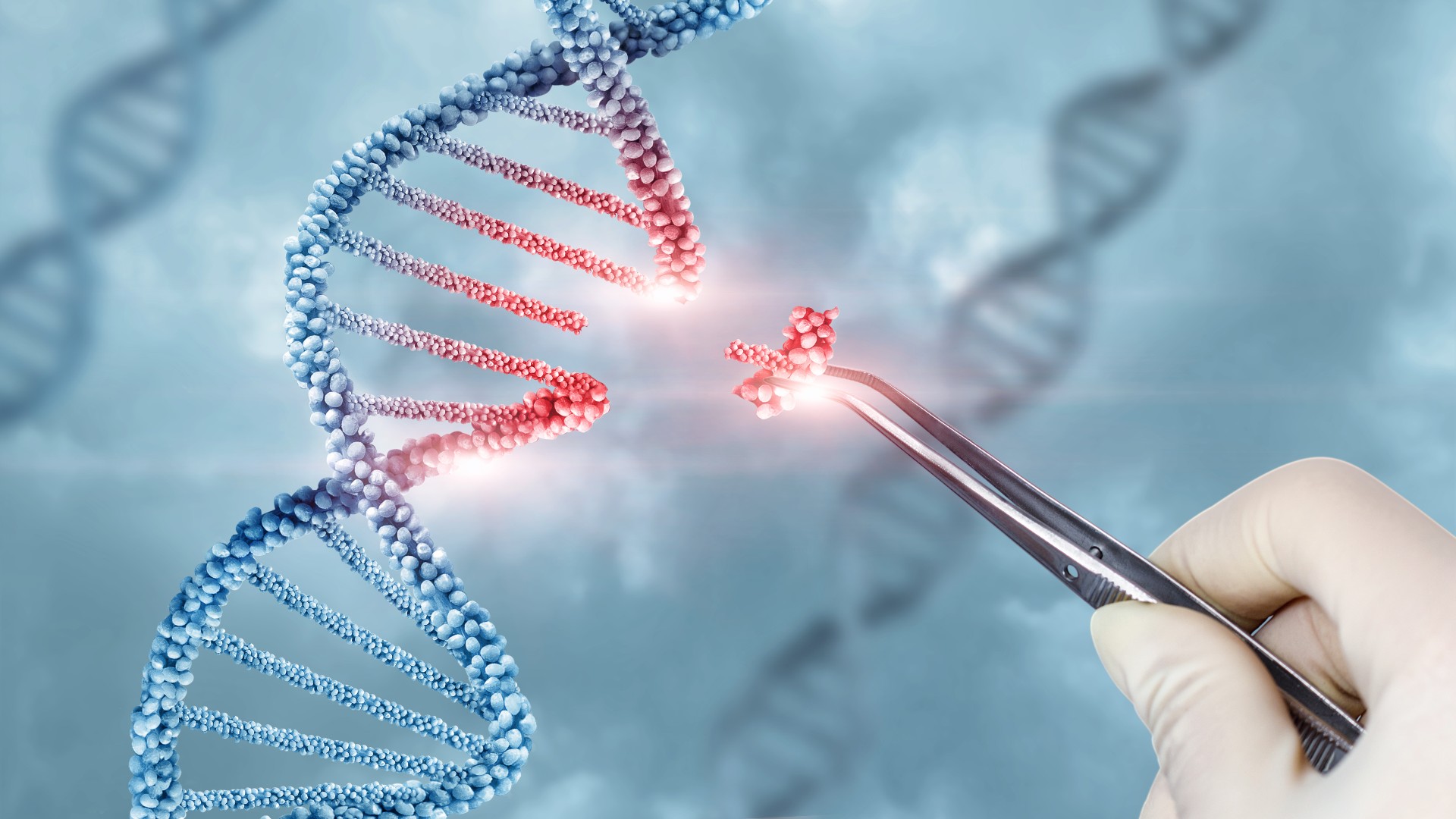

This is perhaps the most significant, and most controversial kind of genetic engineering. It is also the least well-developed. The idea of gene therapy is to genetically alter humans in order to treat a disease. This could represent the first opportunity to cure incurable diseases. Note that this is quite different from using genetically-engineered microbes to produce a drug, vaccine or hormone to treat a disease by conventional means. Gene therapy means altering the genotype of a tissue or even a whole human.
Cystic Fibrosis (you must learn this one!)
Cystic fibrosis (CF) is the most common genetic disease in the UK, affecting about 1 in 2500. It is caused by a mutation in the gene for protein called CFTR (Cystic Fibrosis Transmembrane Regulator). The gene is located on chromosome 7, and there are actually over 300 different mutations known, although the most common mutation is a deletion of three bases, removing one amino acid out of 1480 amino acids in the protein. CFTR is a chloride ion channel protein found in the cell membrane of epithelial (lining) tissue cells, and the mutation stops the protein working, so chloride ions cannot cross the cell membrane.
Chloride ions build up inside these cells, which cause sodium ions to enter to balance the charge, and the increased concentration of the both these ions inside the epithelial cells decreases the osmotic potential. Water is therefore retained inside the cells, which means that the mucus secreted by these cells is drier and more sticky than normal. This sticky mucus block the tubes into which it is secreted, such as the small intestine, pancreatic duct, bile duct, sperm duct, bronchioles and alveoli.
Given these complicated (and ultimately unsuccessful) treatments, CF is a good candidate for gene therapy, and was one of the first diseases to be tackled this way. The gene for CFTR was identified in 1989 and a cDNA clone was made soon after. The idea is to deliver copies of this good gene to the epithelial cells of the lung, where they can be incorporated into the nuclear DNA and make functional CFTR chloride channels. If about 10% of the cells could be corrected, this would cure the disease.
Two methods of delivery are being tried: liposomes and adenoviruses, both delivered with an aerosol inhaler, like those used by asthmatics. Clinical trials are currently underway, but as yet no therapy has been shown to be successful.
The Future of Gene Therapy
- White blood cells have be genetically modified to produce tumour necrosis factor (TNF), a protein that kills cancer cells, making these cells more effecting against tumours.
- Genes could be targeted directly at cancer cells, causing them to die, or to revert to normal cell division.
- White blood cells could be given antisense genes for HIV proteins, so that if the virus infected these cells it couldn’t reproduce.
It is important to appreciate the different between somatic cell therapy and germ-line therapy.
- Somatic cell therapy means genetically altering specific body (or somatic) cells, such as bone marrow cells, pancreas cells, or whatever, in order to treat the disease. This therapy may treat or cure the disease, but any genetic changes will not be passed on their offspring.
- Germ-line therapy means genetically altering those cells (sperm cells, sperm precursor cell, ova, ova precursor cells, zygotes or early embryos) that will pass their genes down the “germ-line” to future generations. Alterations to any of these cells will affect every cell in the resulting human, and in all his or her descendants.
Germ-line therapy would be highly effective, but is also potentially dangerous (since the long-term effects of genetic alterations are not known), unethical (since it could easily lead to eugenics) and immoral (since it could involve altering and destroying human embryos). It is currently illegal in the UK and most other countries, and current research is focussing on somatic cell therapy only. All gene therapy trials in the UK must be approved by the Gene Therapy Advisory Committee (GTAC), a government body that reviews the medical and ethical grounds for a trial. Germ-line modification is allowed with animals, and indeed is the basis for producing GMOs.