
The Ashinaga Africa Initiative invites applications from Africa who are orphans, having lost one or both parents for a scholarship to study abroad in the 2021/2022 academic year.
This scholarship began in 2014. Its mission is to contribute to Sub-Saharan Africa’s expanding role in global development through increased access to higher education abroad. Overtime the Ashinaga movement extended its financial and emotional support to students who had been orphaned by other causes, including illness, natural disaster, and suicide.
As such, Ashinaga was established in 1993 – named after the Japanese translation of the 1912 Jean Webster novel Daddy-Long-Legs. This expansion included offering residential facilities to enable financially disadvantaged students to attend universities in the more expensive metropolitan areas. Around this time Ashinaga also expanded its summer programs, or tsudoi, at which Ashinaga students could share their experiences amongst peers who had also lost parents.
Worth of Award
- Full financial support to study at a university abroad (equivalent to an undergraduate degree).
- Ashinaga support covers tuition, accommodation, travel costs, and other necessary fees.
Eligibility
Applicants must:
Eligible Countries
- Anglophone and Lusophone: Angola, Botswana, Cape Verde, Ethiopia, The Gambia, Ghana, Guinea-Bissau, Kenya, Lesotho, Liberia, Malawi, Mauritius, Mozambique, Namibia, Nigeria, Rwanda, Sierra Leone, Somalia, South Africa, Sudan, Swaziland, Tanzania, Uganda, Zambia, and Zimbabwe
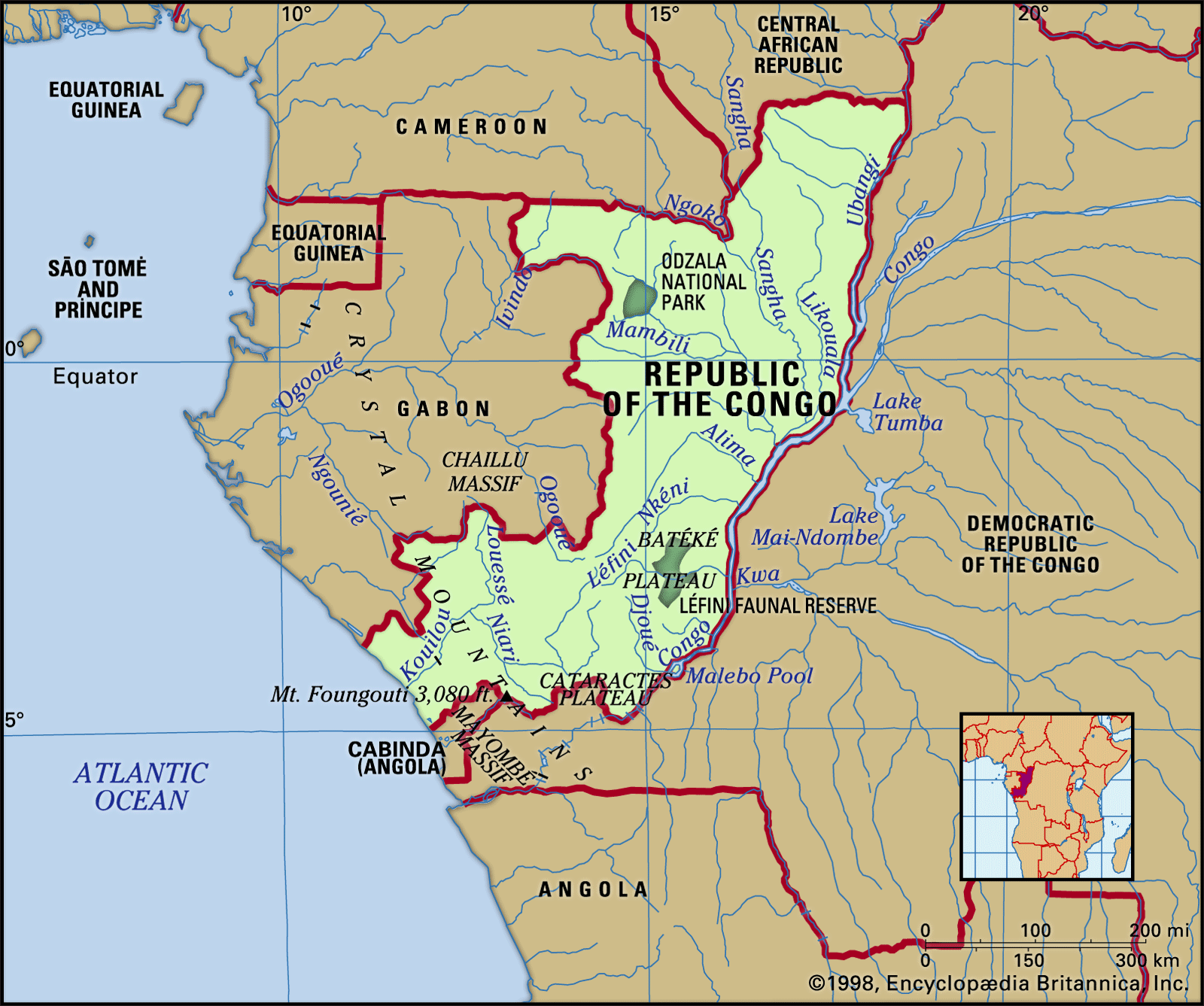
- Francophone: Benin, Burkina Faso, Burundi, Cameroon, Comoros, Côte d’Ivoire, the Democratic Republic of the Congo, Djibouti, Gabon, Madagascar, Mali, Mauritania, Republic of the Congo, Senegal, and Togo
How to Apply
This is a list of the documents you will need to submit as part of your application.
- Copy of birth certificate of the applicant.
- Copy of death certificate of deceased parent(s), including the deceased parent’s name, or alternative official documentation proving the death of parent(s) or orphan status.
- Copy of national ID card or passport.
- Copy of term reports/high school transcripts (from the last 2 years).
- Copy of final Secondary School Examination Certificate.
- Copy of academic transcripts or diplomas from university/post-secondary institution, if applicable.
Deadline: The deadline for Anglophone and Francophone countries is February 19, 2021.